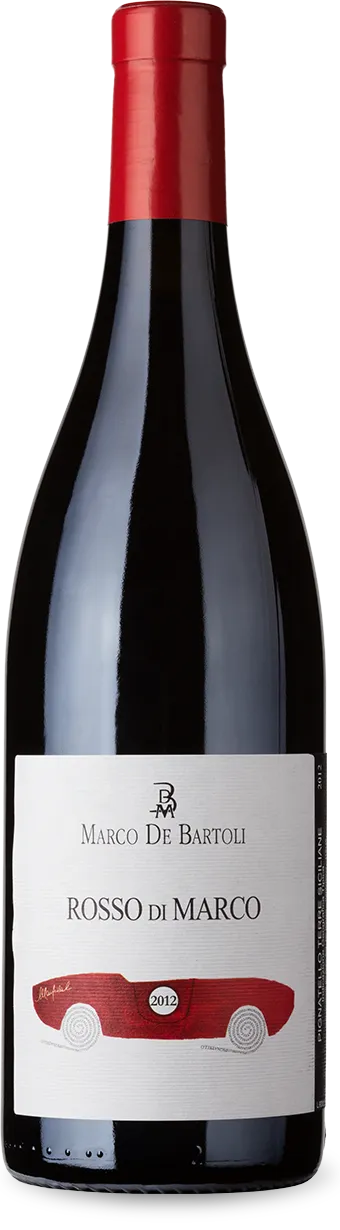
Rosso di Marco is produced with 100% Pignatello grapes, also known as Perricone, a traditional red grape variety from Western Sicily. Having disappeared for many years, it takes its name from the so-called “pignatiddare,” the red lands of the Trapani area named because they were used in the production of cooking pots (pignatte) and are particularly suited for this variety.
Western Sicily, province of Trapani
13% vol.
2011
Over 25 years
Medium-textured clay-limestone.
Training system: Guyot espalier, 3,500 vines per hectare.
Manual, second week of September.
Manual selection of the grapes, with maceration in steel tanks, following a traditional procedure of punching down and pump-overs at a controlled temperature. Fermentation using indigenous yeasts.
24 months in 10 hl French oak barrels and 1 month in the bottle.
The red Giulietta Spider on the label speaks first and foremost to the character of Marco De Bartoli. A passion for speed, freedom, and unconventional choices that is also found in this wine.
Rosso di Marco was born just like that, as a challenge: to prove that a great red can be made in Marsala without following external models. For this reason, the choice fell on Pignatello, a historic variety of the Trapani area, linked to the red clay lands from which it derives its name. A grape with a strong character, capable of expressing structure and depth without losing its identity.
The label also remains faithful to this approach: it does not tell the story of the wine, but of the person who imagined it. Rosso di Marco is thus the expression of a less expected, yet authentic territory. A wine that is born from the earth, but tells the character of the one who envisioned it.
The estate is located in Contrada Samperi, twelve kilometers from Marsala, on calcareous and sandy soil that the Mediterranean wind sweeps across unimpeded. The baglio dates back to the late nineteenth century — thick walls, filtered light, the scent of aged wood already noticeable from outside. Around it, Grillo vineyards cultivated in the alberello system, as is the tradition of this land.
12 HA
medium-textured sandy-limestone, flat
alberello and Guyot-trained vertical shoot positioning; 3,500 vines per hectare.
manual in small crates, during the final weeks of September.
Manual selection of grapes, soft pressing, natural sedimentation, traditional fermentation in oak and chestnut barrels at room temperature.
Aging in oak and chestnut barrels with the addition of 5% younger wine each year, using the traditional perpetual method.
8.600